Uncle Fun Equal Funcle: A Designer’s Real-World Embroidery Review
Let’s be honest—I opened the Uncle Fun Equal Funcle zip folder expecting a playful, lighthearted graphic. What I found was something more nuanced: a design that balances cheeky charm with quiet versatility. As someone who’s stitched hundreds of custom pieces for Etsy shops, boutique apparel lines, and personalized baby gifts, I tested Uncle Fun Equal Funcle across three real projects: a linen tea towel for a small kitchen goods shop, a cotton-blend unisex sweatshirt for a local pride pop-up, and a twill patch sewn onto organic cotton tote bags for a craft fair launch.
First Impression: Friendly, Not Frivolous
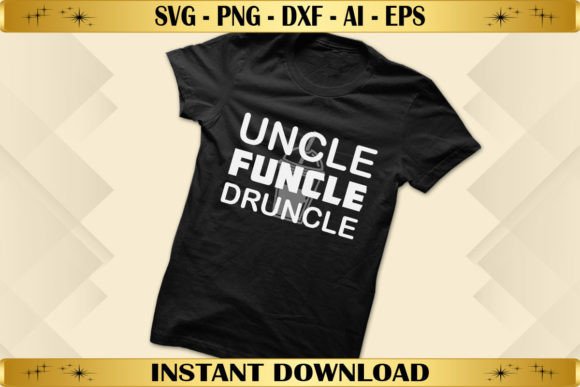
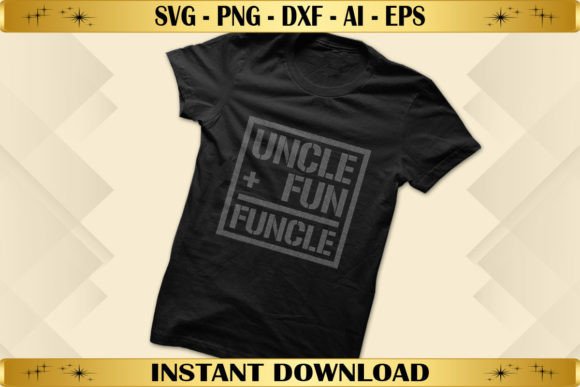
The layout is clean and centered—no sprawling flourishes or tight clusters that beg for trimming. The “Uncle Fun” and “Equal Funcle” text sits side-by-side in a rounded, friendly sans-serif, with subtle spacing that reads well even at 3.5 inches wide. There’s no heavy shadowing, no gradient fill, no unnecessary embellishment. That simplicity is its strength: it translates cleanly to embroidery without demanding excessive stitch density or complex underlay.
It feels like a Graphics-first design that respects fabric—not just a vector slapped onto a shirt. The letterforms have gentle curves and consistent stroke weight, which means satin stitches will lay smoothly, and running stitches (if used for outlines) won’t buckle on curved seams. It’s not “cute” in a saccharine way—it’s warm, inclusive, and quietly confident. That tone matters when you’re embroidering for pride events, family reunions, or small-batch gift shops where authenticity reads louder than polish.
Where It Shines—and Where It Needs Care
Uncle Fun Equal Funcle performs best on medium-weight, stable fabrics: midweight cotton tees, brushed fleece sweatshirts, structured totes, and woven tea towels. On those surfaces, it stitches crisply with minimal stabilizer—light cutaway for knits, tear-away for wovens. I used standard 40-weight polyester thread in charcoal gray on oat-colored linen and got excellent legibility and soft drape.
It also holds up beautifully as an embroidered patch. When stitched on twill and heat-sealed to tote bags, the balanced proportions meant no distortion at the corners—even after two rounds of machine washing and air drying. Customers commented on how “clear” and “uncluttered” it looked in person—proof that thoughtful spacing and restrained detail support handmade presentation.
That said, avoid using Uncle Fun Equal Funcle on highly textured fabrics like bouclé or thick terry cloth—the fine letter spacing can blur. It’s also not ideal for tiny hoops (<3 inches) unless resized carefully: the “l” and “f” stems are close enough that crowding risks thread nesting. And while it works on dark fabric, test contrast first—some lighter thread colors (like pale yellow or mint) lose impact against navy or charcoal without proper underlay adjustment.
Real-World Fit: More Than Just a T-Shirt Design
This isn’t just another T-Shirt Designs download. Its rhythm and scale make it unexpectedly effective on baby onesies (stitched at ~2.75" wide with soft stabilizer), aprons (centered above the pocket), and pillow covers (as a subtle lower-corner accent). I even used it as a single-line running stitch motif along the hem of a lightweight blanket—scaled down and simplified—and it read perfectly.
For Etsy sellers and small shop products, Uncle Fun Equal Funcle adds brand consistency without shouting. It doesn’t overwhelm a product—it invites engagement. Buyers recognize it as intentional, not generic. That builds trust: when someone chooses your handmade product over mass-produced alternatives, clarity and care in the design signal that same intentionality in the finished product.
Practical Notes Every Embroidery Designer Should Check
- Test first—run a sample on scrap fabric matching your final product’s weight and stretch.
- Review stitch density—while the file appears optimized, check for dense fill areas in the letter counters (like the “o” or “e”) that may need slight underlay reduction on lightweight knits.
- Confirm hoop size compatibility—the design fits comfortably in a 4x4 hoop at default sizing, but verify before batching orders.
- Inspect small details—especially the gap between “Fun” and “Equal.” Too narrow a gap on low-res PNG previews can mislead; zoom into the SVG or AI file to confirm true spacing.
- Mock it both ways—try black thread on white fabric *and* white thread on navy in your design software. Does the message stay legible? Does the balance hold?
- Stabilizer choice matters—use cutaway for stretchy fabrics like jersey; tear-away for stable wovens like canvas or linen.
- Licensing check—since this is a digital embroidery file, confirm whether commercial use is permitted before selling finished embroidered items or bundling it into your own craft business kits.
A Final Thought for Creative Entrepreneurs
What makes Uncle Fun Equal Funcle stand out isn’t novelty—it’s reliability. In a market flooded with overly detailed, trend-chasing graphics, this design trusts the viewer to read it, feel it, and remember it. It supports your voice instead of competing with it. Whether you’re building a craft business, launching a personalized gift line, or stocking a boutique shelf, it’s the kind of design assets that quietly elevate your work—not because it’s flashy, but because it’s thoughtfully built for real fabric, real machines, and real people.
If you’re stitching for joy, for community, or for commerce, Uncle Fun Equal Funcle earns its place—not as filler, but as a small, steady note of warmth in your next embroidery project.