Go Luck Yourself: A Designer’s Real-World Embroidery Review
As someone who’s stitched hundreds of designs onto everything from baby onesies to boutique aprons, I opened the Go Luck Yourself files with a quiet but specific question: “Will this hold up—not just on screen, but on fabric, under thread, and in a customer’s hands?” I tested it on a linen-cotton tote bag destined for a local gift shop, then revisited it on a soft heather-gray sweatshirt for a holiday pop-up. Here’s what I found—not as a marketer, but as a designer who relies on clarity, craft, and consistency.
A First Impression That Feels Intentional, Not Generic
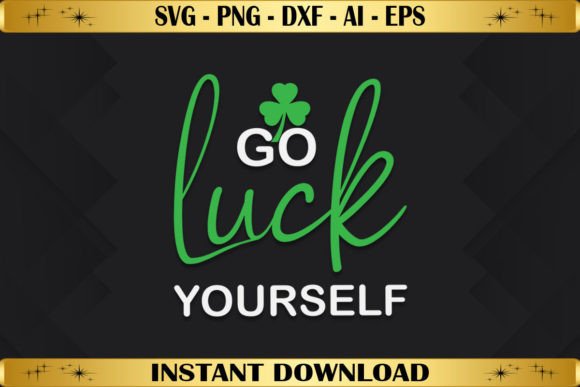
The Go Luck Yourself design lands with warm, grounded energy—no frantic glitter or overwrought whimsy. It’s clean-lined, lightly stylized, and built around balanced negative space. The lettering has gentle curves and open counters; the layout breathes without feeling sparse. This isn’t a shout-it-from-the-rooftop graphic—it’s a quiet nod, a wink, a handmade charm you’d stitch onto a kitchen towel for your sister or a patch for a child’s backpack. Its personality fits best with products where sincerity matters more than flash: nursery decor, teacher appreciation gifts, small-batch apparel, and thoughtful Etsy listings.
Where It Shines in Real Embroidery Projects
I used Go Luck Yourself as a machine embroidery design on three very different substrates: medium-weight cotton twill (for a custom embroidered patch), French terry (on a relaxed-fit sweatshirt), and lightweight linen (for a pillow cover). In every case, the design retained legibility and warmth after stitching—no crushed details, no thread pooling, no awkward gaps between letters. The stroke weight holds up beautifully in satin stitch, and the spacing between characters allows fill stitch to settle evenly without distortion.
- Custom apparel: Looks confident on crewnecks and raglan tees—especially when centered above the left chest or across the back yoke.
- Tote bag design: Anchors the front panel without overwhelming the natural drape of canvas or cotton duck.
- Baby embroidery: Soft enough for onesies and burp cloths, especially when stitched in matte cotton thread on light fabric.
- Holiday embroidery: Works well on tea towels, oven mitts, or stocking cuffs—subtle enough for multi-generational homes, not too cutesy for adult gifting.
- Commercial embroidery: Scales cleanly from 3” to 5”, making it flexible for both small-batch makers and shops handling consistent client orders.
Where to Pause—and Plan Ahead
Go Luck Yourself is forgiving, but not magic. On textured fabrics like bouclé or thick terry, I recommend testing the design at your intended size before committing—some fine interior lines may soften slightly. On stretchy knits, use a cutaway stabilizer and reduce top tension just enough to keep satin stitch smooth without puckering. And while the design reads clearly on dark fabric in mockups, always test thread colors in person: a soft sage or oatmeal thread gives more depth than stark white on navy, for example.
It’s also not ideal for ultra-small hoop sizes (under 3”). The letterforms have presence—and that’s a strength—but they don’t shrink gracefully below 2.5”. If you’re planning embroidered caps or tiny keychain patches, consider simplifying or reworking the layout yourself. Likewise, avoid placing it directly over seams, curved brims, or layered hems unless you’ve pre-tested alignment and stitch clearance.
What It Adds to Your Finished Product—Beyond the Thread
This is where Go Luck Yourself quietly earns its place in a craft business. It elevates a plain tote into a curated gift. It adds warmth to a minimalist sweatshirt without compromising its clean aesthetic. Customers notice it—not because it’s loud, but because it feels *chosen*, not slapped on. That sense of intention builds trust: buyers associate the phrase with care, not cliché.
For Etsy sellers and small shop owners, it supports brand consistency without demanding rigid rules. You can pair it with neutral thread palettes, natural fabric bases, and simple packaging—and still communicate personality. It doesn’t fight your voice; it amplifies it. And because it avoids trendy fonts or overused motifs, it stays relevant across seasons and customer demographics.
Practical Designer Notes Before You Stitch
Before using Go Luck Yourself in your next embroidery project—or listing it as part of a digital embroidery file bundle—here’s what I do every time:
- Test on scrap fabric *with your exact stabilizer and thread combo*—not just once, but twice: once at full size, once scaled to your most common use case.
- Review stitch density in your embroidery software. If fill areas feel heavy on lightweight fabric, reduce density by 5–8% and retest.
- Check small interior corners (like the counter of the “e” or curve of the “g”)—they should clear cleanly without skipped stitches or thread nesting.
- Run black-and-white and high-contrast mockups. Does it retain character on both light and dark backgrounds? (It does—but verify with your own workflow.)
- Confirm licensing terms before selling finished items or bundling the files. Since this is labeled a Graphics product in the T-Shirt Designs category, double-check whether commercial use is included or requires separate permission.
- Use proper stabilizer—especially for knit or loosely woven fabrics. A medium-weight tear-away works well for most applications, but switch to cutaway for anything that will be washed frequently.
Finally, remember: even great embroidery files need context. Go Luck Yourself isn’t just a phrase—it’s a tone, a gesture, a small moment of encouragement. Let that guide where you place it, how you pair it, and who you imagine holding the finished product. That’s where real design judgment lives—not in the file format, but in the thought behind the stitch.