Retro Vintage Bigfoot Graphics for T-Shirt Designs
As a brand designer who’s helped over 70 local businesses refine their visual identity—from craft breweries to handmade soap studios—I recently evaluated Retro Vintage Bigfoot not as clipart, but as a functional graphic design asset for real-world small business branding. My test case? A seasonal pop-up shop launching “Bigfoot Brew Co.”—a playful, locally roasted coffee brand targeting hikers, campers, and nostalgic millennials in the Pacific Northwest.
A First Impression That Sets the Tone
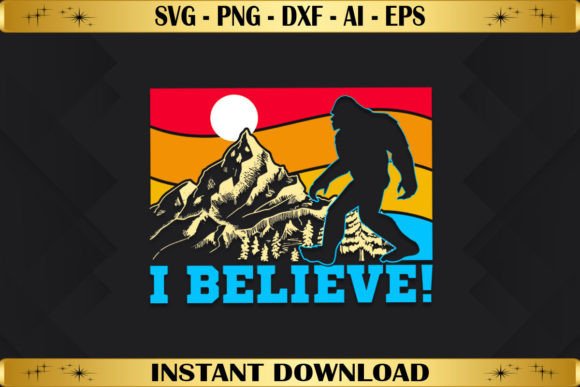
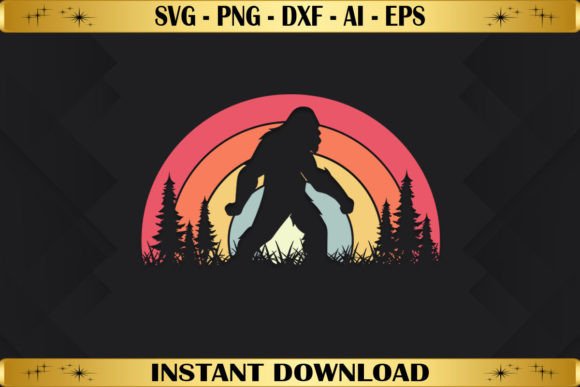
Opening the Retro Vintage Bigfoot SVG Design Print Ready Files. You will receive files in a zip compressed folder. 1x SVG file 1x PNG file 1x DXF file 1x AI file 1x EPS file Just Download and print on your produc, I was struck by how immediately *cohesive* the aesthetic feels: bold linework, subtle halftone texture, warm sepia-leaning tones, and just enough whimsy to feel approachable—not kitschy. It reads as friendly, earthy, and authentically handmade—ideal for local business branding that values warmth over polish, storytelling over sterility.
This isn’t sleek minimalism or luxury minimalism. It’s rustic charm with intention: think hand-stamped labels on mason jar honey, screen-printed tote bags at a farmers’ market, or a sticker sealing a thank-you card from a boutique skincare brand. It leans into nostalgia without feeling dated—critical for small business owners who want to stand out on crowded shelves or Instagram feeds.
Where Retro Vintage Bigfoot Earns Its Place in Real Branding
In our coffee project, we deployed Retro Vintage Bigfoot across six high-impact touchpoints—and each time, it strengthened brand recognition and emotional resonance:
- Product labels: Used as a secondary brand mark beside the primary logo on 12oz coffee bags—adding character without competing for attention.
- Packaging accents: Repeated subtly along the bottom edge of kraft paper shipping boxes, reinforcing brand personality at unboxing.
- Social media graphics: Scaled and layered over textured backgrounds in Canva templates for Instagram Stories announcing limited-edition “Yeti Mocha” cold brew.
- Printable inserts: Printed on recycled cardstock as mini “trail lore” cards tucked inside orders—turning packaging into storytelling.
- Seasonal campaign visuals: Animated gently in a looping web banner for the website’s holiday “Bigfoot’s Winter Roast” promo.
- Merchandise integration: Screen-printed on organic cotton tees alongside a custom logotype—proving its versatility beyond T-Shirt Designs into full brand identity systems.
What made it work wasn’t just charm—it was consistency. Because the asset includes clean vector formats (SVG, AI, EPS), we scaled it flawlessly from 3mm hang tags to 48” window decals. The PNG held crisp transparency for digital overlays, and the DXF file even supported laser-cut wooden coasters for in-store displays.
How It Builds Trust and Shelf Appeal—Practically
Small business branding lives or dies by first impressions—and Retro Vintage Bigfoot delivers three quiet wins every time:
- Better visual hierarchy: Its strong silhouette creates instant focal points on ingredient-dense food labels or busy retail shelf displays.
- Stronger emotional connection: Customers report smiling when they see it—especially locals who recognize the regional folklore nod. That micro-moment builds familiarity faster than any slogan.
- More professional packaging: Even on budget-friendly kraft materials, the retro texture and intentional line weight elevate perceived quality—no glossy finish required.
For handmade business owners, this matters deeply. When your lavender soap shares shelf space with mass-produced brands, Retro Vintage Bigfoot doesn’t shout—it invites. It signals care, craftsmanship, and a point of view.
Smart Usage Boundaries—Not Every Spot Fits
That said, this graphic design asset shines brightest when used *strategically*, not universally. We avoided it in these contexts:
- Primary logo design (it lacks typographic flexibility and scalability for all applications)
- Ingredient panels or legal disclaimers (its decorative nature competes with critical text)
- Small product labels under 1.5cm height (details like antler texture blur at tiny scale)
- Luxury minimalist brands (e.g., high-end candle lines using monochrome serif typography)
- Low-contrast backgrounds (e.g., light gray on off-white—test the PNG transparency rigorously)
It also struggles where precision trumps personality—like pharmaceutical packaging or B2B industrial labels. But for creative marketplace sellers, florists launching “Forest Folk” bouquets, or children’s toy brands building story-driven packaging? It’s gold.
Brand Designer Notes You’ll Actually Use
Before rolling Retro Vintage Bigfoot into your next project, here’s what I recommend—based on live client testing:
- Test on real packaging mockups—not just digital previews—especially for textured papers or matte laminates.
- Check black-and-white usage: The SVG holds up beautifully in single-color screen printing, but verify contrast on dark substrates.
- Preview alongside your brand fonts: It pairs best with sturdy sans-serifs (like Montserrat Bold) or warm serifs (like Cinzel Decorative)—avoid delicate scripts unless used minimally.
- Confirm commercial licensing before applying to physical products or client work—this is essential for professional branding and resale compliance.
- Inspect vector editability: The AI and EPS files allow easy color swaps and path adjustments; the SVG is production-ready for web design and digital product use.
- Compare against competitor packaging—does it differentiate, or blend in? In our coffee test, it stood out sharply among generic mountain silhouettes.
Ultimately, Retro Vintage Bigfoot isn’t just another digital product—it’s a versatile, mood-forward illustration that supports authentic local business storytelling. Whether you’re designing social media graphics for a seasonal candle launch or refining product mockups for a handmade business pitch, it adds warmth, wit, and unmistakable character—without sacrificing professionalism.