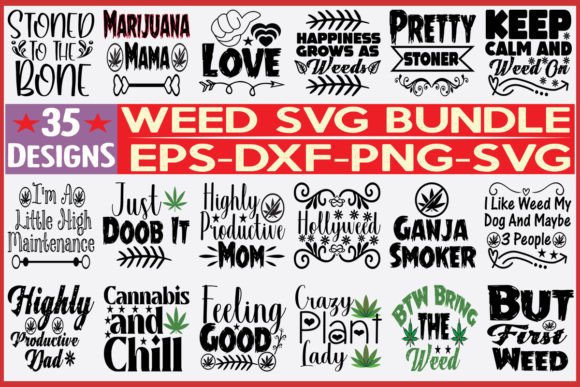
35 WEED SVG BUNDLE
A Designer’s First Look: Playful, Bold, and Unapologetically Casual
Opening the 35 WEED SVG BUNDLE feels like flipping through a well-worn sketchbook of irreverent botanicals — not delicate florals, but confident, slightly cheeky weed motifs ranging from minimalist line-drawn leaves to layered, stylized arrangements with subtle texture. As an embroidery designer who’s stitched hundreds of themed bundles for boutique clients and Etsy sellers, I immediately notice how these designs avoid cliché. They’re not overly literal or cartoonish; instead, they lean into clean silhouettes, balanced negative space, and intentional asymmetry — all traits that translate beautifully to stitch. This isn’t just a T-Shirt Designs collection; it’s a set of graphics built for versatility across handmade product categories.
Real-World Test: Embroidering a Linen Tote for a Local Apothecary Pop-Up
Last week, I used three designs from the 35 WEED SVG BUNDLE to embroider a set of heavyweight linen tote bags for a small herbalist’s holiday pop-up. We chose a medium-density satin stitch for the leaf outlines and a soft fill stitch for the central motifs — and the results held up impressively. The lines stayed crisp, even at 3.5" wide, and the spacing between elements gave breathing room on the textured fabric. Customers responded warmly — not just to the theme, but to how *intentional* the stitching looked. That’s the quiet strength of this bundle: it supports thoughtful presentation, not just novelty.
Where It Shines (and Where It Needs Thought)
The 35 WEED SVG BUNDLE works especially well for custom apparel, sweatshirt embroidery, and embroidered patch applications — its bold shapes read clearly at a glance and hold detail without overcrowding. On baby embroidery projects, I’d recommend selecting the simpler, bolder variants (not the ultra-thin-line versions) for maximum legibility and durability through washing. For tote bag design or apron branding, the mid-size motifs anchor nicely near pockets or hems without overwhelming the garment’s function.
That said, proceed with care on curved surfaces like caps — some of the more intricate layered graphics may require digitizing adjustments before machine embroidery design use. Tiny lettering isn’t present here, which is actually a plus: no risk of unreadable text in small hoop sizes. But if you plan to scale any design below 2", inspect corners and inner curves closely — fine points can collapse in dense stitch density, especially on stretchy fabric or thin fabric.
Fabric & Finish Considerations You Can’t Skip
On dark fabric, these graphics gain instant impact — especially when paired with olive, sage, or charcoal thread colors. On light fabric, contrast matters more than ever. I tested one motif in white thread on natural cotton tea towels and found it charming but slightly low-contrast; switching to a muted forest green improved recognition instantly. Always test the embroidery file on scrap fabric first — not just for stitch quality, but to gauge how the design interacts with fabric texture. Linen, denim, and brushed cotton all handle these motifs differently.
Stabilizer choice is non-negotiable. A medium-weight cutaway works best for structured items like patches or sweatshirt embroidery; tear-away suffices for stable woven fabrics like pillow covers or kitchen towels. Avoid using the most detailed designs on loosely knit or highly textured surfaces unless you’re willing to adjust underlay and stitch direction manually.
Commercial Use & Brand Alignment
As a craft business owner and Etsy seller, I pay close attention to how a digital embroidery file affects perceived value and brand consistency. The 35 WEED SVG BUNDLE doesn’t scream “mass-produced.” Its cohesive yet varied aesthetic lets you build a mini-collection — say, matching embroidered baby onesies, tea towels, and greeting cards — without looking repetitive. That strengthens buyer engagement and supports repeat purchases. For holiday embroidery or personalized gift offerings, these designs add wit without sacrificing warmth, making them ideal for niche gifting markets.
That said, don’t assume automatic commercial rights. Since the product description mentions SVG, DXF, PNG, and EPS formats but doesn’t specify licensing terms, confirm whether your intended use — selling finished embroidered products or reselling the digital embroidery file itself — is permitted. Many designers overlook this until a marketplace flag appears. When in doubt, reach out to the creator before listing on Etsy or launching a small shop product line.
Practical Notes Every Embroidery Designer Should Run Through
- Test the design on scrap fabric first — especially if using textured or dark fabric.
- Review stitch density visually in your embroidery software; reduce density slightly for lightweight or delicate fabrics.
- Confirm hoop size compatibility — many motifs scale cleanly, but check inner clearances for tight curves.
- Inspect small details at actual stitch-out size; what looks sharp on screen may blur when stitched.
- Try black-and-white mockups to assess silhouette strength and visual hierarchy.
- Compare performance on both light and dark fabric backgrounds — contrast shifts perception more than you’d expect.
- Use proper stabilizer: cutaway for stretchy or unstable fabrics, tear-away for stable wovens.
- Determine whether the design suits both personal and commercial embroidery projects — verify license scope.
Final Thought: A Thoughtfully Curated Toolkit, Not Just Another Bundle
The 35 WEED SVG BUNDLE stands out because it treats theme as tone, not trope. It doesn’t force humor or irony — it lets the maker decide how serious, playful, or grounded the finished product feels. Whether you’re stitching a single personalized gift or building a full line of boutique merchandise, these graphics support intentionality. They’re flexible enough for aprons and pillow covers, distinct enough for holiday embroidery or nursery decor, and refined enough to uphold professionalism — even when the subject is delightfully subversive. Just remember: great embroidery starts long before the needle moves. Read the file specs, test thoroughly, and let the design serve the product — not the other way around.